Hidden Price Hike: OpenAI Halves ChatGPT Pro


Set Trending Topics as a preferred source on Google.
The flat rate for A.I. agents is getting more expensive, even though the price stays the same. OpenAI has relaunched its $200 ChatGPT Pro plan (about 171 euros), but anyone who signs up now gets only about half the usage they used to. At the same time, OpenAI is adding a new Pro 500 tier at $500 (about 427 euros) a month. The change hits hardest those who let the coding agent Codex or other agents work autonomously for hours, and it shows where the cost of A.I. agents could be heading.
What Changes for ChatGPT Pro
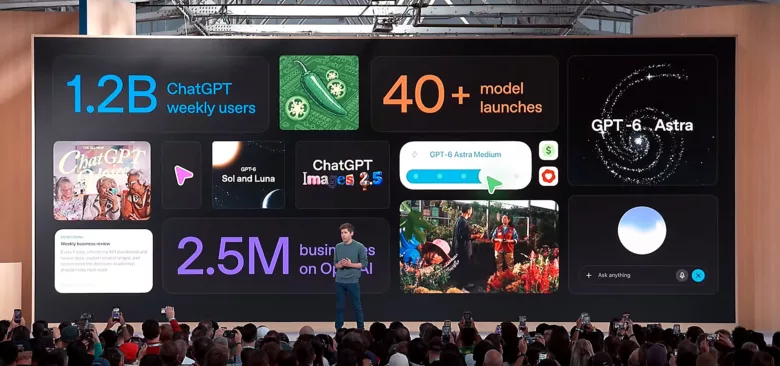
OpenAI measures usage in its plans as a multiple of the $20 Plus plan. Pro 200 used to include 20 times that amount; now it includes 10 times. The new Pro 500 tier offers 25 times the Plus allowance and is the only tier with the especially fast “Ultrafast” mode for the top model, GPT-6 Astra. The smaller $100 Pro tier (about 85 euros), which OpenAI introduced in the spring, stays at 5 times.
- Plus ($20): 1x usage
- Pro 100 ($100): 5x usage
- Pro 200 ($200): 10x usage, previously 20x
- Pro 500 ($500): 25x usage plus Ultrafast
That eliminates the volume discount: Every tier now costs $20 per Plus unit, compared with just $10 for Pro 200 before. Existing Pro 200 subscribers keep their old allowance until the end of October, according to OpenAI. New subscriptions, OpenAI says, come with a “lower usage allowance.” In return, the previous five-hour usage window is gone, and usage is now measured only on a weekly basis. Once the allowance runs out, users can buy additional credits for Codex, ChatGPT Work and the Office integrations.
Measured at API List Prices
Codex chief Thibault Sottiaux was unusually frank about the cut on X: measured at API list prices, the new Pro 200 nets out at half as much as the old one. Part of the reasoning is that OpenAI recently cut API prices for its cheaper models, GPT-6 Sol and Luna, by about 50 percent. Anyone who mainly uses those models will get roughly as many tokens as before. For the top model Astra, which did not get cheaper, the amount really is halved.
How generous the old plans were became clear over the summer, when the research firm SemiAnalysis bought ChatGPT and Claude subscriptions and ran long coding tasks until it hit the weekly limit. The result: A maxed-out $200 Pro plan delivered tokens worth up to $14,000 (about 12,000 euros) at API list prices, compared with about $8,000 for Claude Max. List prices are not the same as actual compute costs, but the gap shows how heavily power users have been subsidized. Nick Turley, the head of ChatGPT, said on a podcast in the spring that unlimited plans make about as much sense in the long run as an unlimited electricity plan.
Agents Devour Tokens
For ordinary chats, this barely matters. A.I. agents are a different story: They work on their own for hours, read entire code bases, call tools and check their own results. Every one of those steps consumes tokens, and the longer an agent runs, the more context it drags along. OpenAI, Anthropic and Perplexity already offer auto-reload features that automatically buy more credits once the allowance is used up.
If agents become everyday tools that answer emails, book trips or do the shopping, pure pay-per-use billing could make them seriously expensive. Many software companies are already feeling the pressure: According to a study, four in five SaaS and A.I. companies are considering price increases because of rising compute costs.
Ads and Commissions as a Way Out
To keep agents affordable for the mass market, other revenue streams are needed, and OpenAI is building them right now. Its advertising business in ChatGPT reached an annualized run rate of $1 billion in less than 200 days. With Sponsored Agents, advertisers in the United States can already run their own agents in ChatGPT, with the conversations paid for by the company. Then there are transaction fees: When users buy directly in ChatGPT, OpenAI collects a commission from merchants. And with Sign in with ChatGPT, users will be able to take their token allowance to other apps, shifting the cost onto their own subscription.
Agents financed by ads or commissions look free to users, but they come with their own incentives. An agent that earns a cut of the purchase is not necessarily neutral when it compares products. Anyone who wants to avoid that will probably have to pay for ad-free, independent agents, most likely on a pay-per-use basis.
Tokens Are Getting Cheaper at the Same Time
There is a countertrend, however. Prices per token have been falling rapidly for years, and OpenAI itself just halved them for Sol and Luna. Chinese providers Xiaomi and DeepSeek even cut their API prices by up to 99 percent in the spring. Smaller, cheaper models are good enough for many agent tasks, so the cost per task can fall even as allowances shrink. Mr. Sottiaux also argues that basing the new formula on list prices passes future price cuts directly on to customers.
OpenAI is not alone in reshuffling its plans. Anthropic introduced weekly limits on its Max plans for its coding tool Claude Code last year, after some users had been running their subscriptions around the clock.