A Continent Without A.I. Agents: Europe Has to Wait for Dots, Muse and Siri AI


Set Trending Topics as a preferred source on Google.
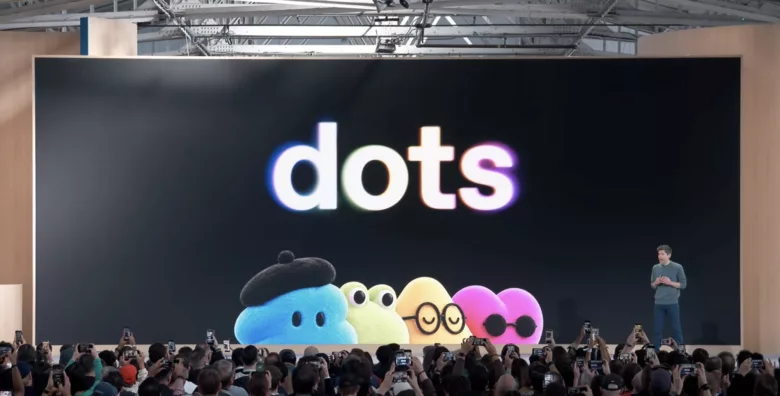
The new A.I. agents that work around the clock for their users are arriving everywhere except Europe. OpenAI just unveiled its dots at DevDay in San Francisco, but Pro users in the European Economic Area, Switzerland and the United Kingdom are left out for now. “Dots will not reach Pro users in the European Economic Area, Switzerland or the UK for now,” OpenAI said, according to The Next Web. Apple’s new Siri AI faces a similar fate, since it will not run on iPhone and iPad in the E.U. for now. And those who do get access to dots need a pricey subscription.
Only for Pro and Business Premium Customers
According to OpenAI, the first dot is included only in the Pro and Business Premium plans, and only “in eligible markets.” The Pro subscription costs $200 a month in the U.S. and 229 euros including VAT in Europe. Business Premium is a seat in a Business workspace priced at $100 (about 85 euros) per person. It is currently the only way to use dots in Austria, Germany and Switzerland, because Business Premium is available in all supported regions. Enterprise customers can test the beta once their admins enable it.
It is not getting cheaper. At the end of October, OpenAI will halve the usage allowance in the $200 Pro plan, while launching a new Pro plan at $500 a month, which costs 510 euros in Europe. During the first month, work done by dots does not count toward the allowance; after that, OpenAI plans to set terms for each plan. How much an agent running constantly in the background will actually consume remains unclear.
Meta’s Muse Is U.S.-Only
Things look no better at its biggest rival. Meta launched its Muse agent about three weeks ago, but also in just one country: “Muse is rolling out in the US on iOS, Android, and muse.ai,” the company said in its announcement, which mentions no plans for Europe. Meta’s advantage: Muse is free for a large number of tokens, and the company aims to make money through a small fee on transactions the agent completes.
G.D.P.R., A.I. Act, D.S.A., D.M.A.: The Possible Reasons
OpenAI has not explained why Europe is being left out. The pattern is familiar, though: the video tool Sora launched in 2024 without the E.U., and the Operator agent reached other countries only weeks after its U.S. debut. There is no shortage of possible reasons, since agents that run permanently in the background touch several E.U. rulebooks at once:
- Data protection: A dot has ongoing access to email, calendars and connected apps. Under the G.D.P.R., every such processing activity needs a legal basis and a clearly defined purpose, especially profiling, meaning automated inferences about preferences, behavior or financial circumstances, as TechRepublic lays out using Meta’s agents as an example.
- A.I. Act: The European A.I. law’s transparency obligations have applied since August. A.I. systems must disclose that they are A.I. and label generated content in a machine-readable way. Violations can bring fines of up to 15 million euros or 3 percent of global annual revenue. For an agent that writes emails and schedules meetings on behalf of its users, that is no small matter.
- D.S.A.: The European Commission recently designated ChatGPT a “very large online search engine” under the Digital Services Act, because it reaches more than 45 million monthly users in the E.U. By January, OpenAI must therefore assess and mitigate the systemic risks of its service, including to minors, fundamental rights and elections. A new agent feature expands exactly that risk surface.
- D.M.A.: For Meta, the Digital Markets Act also comes into play. As a gatekeeper, the company needs separate consent before combining data from Facebook, Instagram, WhatsApp and Messenger, and must offer a less personalized alternative. An agent like Muse that works across these services falls squarely under those rules.
Siri AI Is Missing on iPhone and iPad, Too
Apple shows how far the dispute over rules and agents can escalate. The new Siri AI, which Apple recently launched, is not available in the E.U. on iPhone, iPad or Apple Watch, only on the Mac and Vision Pro. Apple explicitly blames the D.M.A.: otherwise, it says, “Apple would have to give any virtual assistant direct access to users’ private data” and the ability to directly control other installed apps. There is no timeline for an E.U. launch.
The European Commission sees it differently. “The decision not to roll out Siri AI in the EU is Apple’s and Apple’s only,” Commission spokesman Thomas Regnier said, according to Silicon UK. Instead of offering a solution, he said, Apple had asked for an exemption from its interoperability obligations for at least 18 months. According to Euronews, the Commission stressed that “absolutely nothing in the DMA” prevents Apple from introducing new products in the E.U.
Peter Steinberger in the Audience
Peter Steinberger was also present at the dots presentation, which fits the picture. The Austrian developer, who once founded PSPDFKit, became world famous with the open-source agent OpenClaw and joined OpenAI in February. He explained why at the time on his own blog: “My next mission is to build an agent that even my mum can use.” That, he wrote, would require a much broader change, a lot more thought on how to do it safely, and access to the very latest models and research. “What I want is to change the world, not build a large company,” Mr. Steinberger wrote, adding that teaming up with OpenAI was the fastest way to bring agents to everyone. OpenClaw itself moved into a foundation that OpenAI sponsors and is meant to stay open and independent.
Dots Look a Lot Like OpenClaw
Anyone who knows OpenClaw will recognize a lot in dots. The open-source agent runs around the clock, often on a dedicated Mac mini, and can be controlled from a smartphone through messaging apps. OpenClaw helped popularize agents “that live inside existing messaging services and control software on a user’s behalf,” VentureBeat writes in its report on dots. That is exactly what dots now do: they work on their own cloud computer, complete tasks independently over days and can be reached through ChatGPT, Slack, Teams and soon by text message. If users allow it, they can even access their laptops.
The key difference lies in how they run. OpenClaw runs on the user’s own hardware, so users keep control of their data. Dots, by contrast, run entirely in OpenAI’s cloud and are tied to a subscription. For Europeans, that has an ironic consequence: anyone who wants to use an agent modeled on Mr. Steinberger’s idea right now has to turn to the original, because OpenClaw can be installed anywhere.