Exein, A Startup from Rome, Raises $270 Million and Becomes a Physical AI Unicorn

Set Trending Topics as a preferred source on Google.
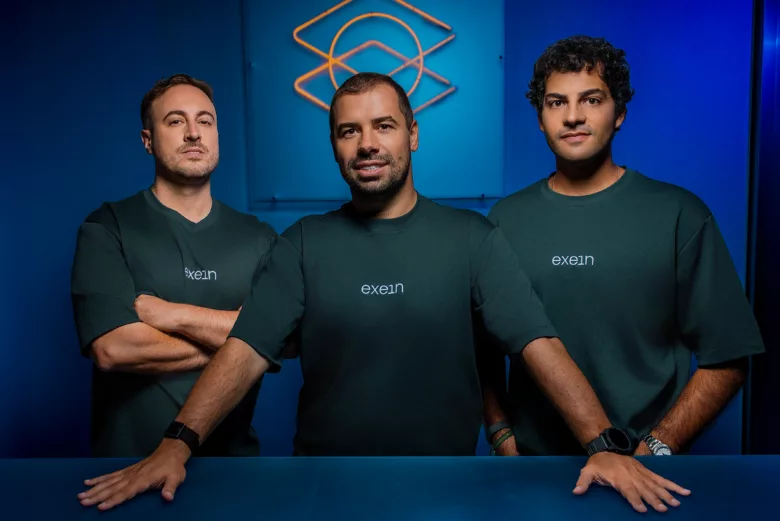
Rome-based cybersecurity company Exein has just announced a funding round of $270 million. The valuation stands at $1.7 billion, making it Europe’s most valuable cybersecurity scaleup. Headline leads the Series C.
Also taking part are Sofina, Goldman Sachs, the European Investment Bank Group through the European Tech Champions Initiative, the Wachstumsfonds Deutschland advised by KfW Capital, and T.Capital, the strategic investment arm of Deutsche Telekom. Existing backers Balderton, HV, Intrepid Growth Partners, 33N Ventures, Lakestar, Supernova Invest, Blue Cloud Ventures and Geodesic Capital are following on. According to the company, the round was significantly oversubscribed. In parallel, Exein’s existing revolving credit facility led by J.P. Morgan is being expanded, with KfW joining as an additional lender.
The growth figures Exein cites: the valuation has risen 30-fold within two years, and annual recurring revenue (ARR) in the first half of 2026 was four times higher than in the same period a year earlier. Around half of revenue comes from the Asia-Pacific region, with Europe and the United States making up the rest. Since its previous funding round in December of last year, the company has opened its APAC headquarters in Taiwan.
What Exein Does
Exein secures machines that run software directly on the device: industrial robots, drones, autonomous vehicles, medical equipment, and energy and semiconductor infrastructure. Its technical approach operates at the level where code actually executes, meaning in the firmware and at runtime, rather than in the network or the cloud. The company says its technology is deployed on more than two billion connected devices.
At the core of the product portfolio is Photon, a runtime security architecture Exein introduced earlier this year. It works at the kernel level and is designed to block malicious code execution before an attack takes effect. That matters for autonomous systems, where responses have to happen in milliseconds and human intervention is effectively out of the question.
On this data foundation, Exein is building its own foundation model, which has been in development for two years. It is trained on machine telemetry from the installed device base, meaning data on how machines behave in real operation. The model is meant to drive autonomous security agents that analyze and protect systems on their own. The agentic security architecture is due to be unveiled by the end of 2026, with the foundation models announced for the first quarter of 2027.
Exein backs up the demand case with its own telemetry: the company says it now registers around 5,000 new, non-repeating attacks per week across its network, five times as many as a year earlier. Founder and CEO Gianni Cuozzo frames the thesis this way: “AI is moving out of the cloud and into the physical world. That is the transition Exein was built for.” Frontier models, he argues, shrink the patching window to zero, so defenses have to operate at the same speed.
With the fresh capital, Exein plans to accelerate its expansion in the United States and Asia-Pacific, build up staff, customers and partnerships in the US, and open an office in the San Francisco Bay Area. The company is also keeping acquisitions on the table. Alongside its Rome headquarters, Exein runs a German office in Karlsruhe.
Europe’s Physical AI Rounds Are Getting Bigger
The round lands in a phase where European investors and corporates are channeling unusual amounts of capital into machines with AI on board. The largest sum so far went to Neura Robotics of Metzingen, which announced a Series C of up to $1.4 billion in early summer, by its own account the largest funding round ever raised by a full-stack robotics company. The investor list includes Tether, Qualcomm Technologies, Amazon, NVIDIA, imec.xpand, Bosch, Schaeffler, the European Investment Bank, Lingotto Horizon and InterAlpen Partners. The capital is going into a physical AI platform, humanoid robots included.
London-based Humanoid followed in the summer, raising 133 million euros in a Series A at a post-money valuation of 1.1 billion euros, led by Prime Movers Lab and likewise with Bosch and Schaeffler on board. Its HMND 01 model rolls on wheels instead of two legs, a design choice meant to speed up European certification.
Zurich added the most recent name with Gravis Robotics, an ETH spinout that secured $200 million from SoftBank at roughly a $1 billion valuation. The company retrofits existing excavators and earthmoving machines with sensors, computing hardware and software. Smaller rounds show the breadth of the field: Italian startup Generative Bionics raised 70 million euros, with Tether among its backers, and German sensor platform Flexoo picked up 11 million euros.
Exein occupies a different position in this field than the robot builders: the more autonomous machines operate in factories, on construction sites and on the road, the larger the market for securing them. Clarey Zhu, partner at Headline, argues along those lines that protecting the physical world will become one of the central cybersecurity challenges of the coming decade. Deutsche Telekom justifies its investment with its own IoT business: with physical AI, business-critical applications move onto the devices themselves, says Christian Schwalbe, CEO of Deutsche Telekom IoT, which raises the stakes for device and firmware security.